Illinois Dog Registration Information
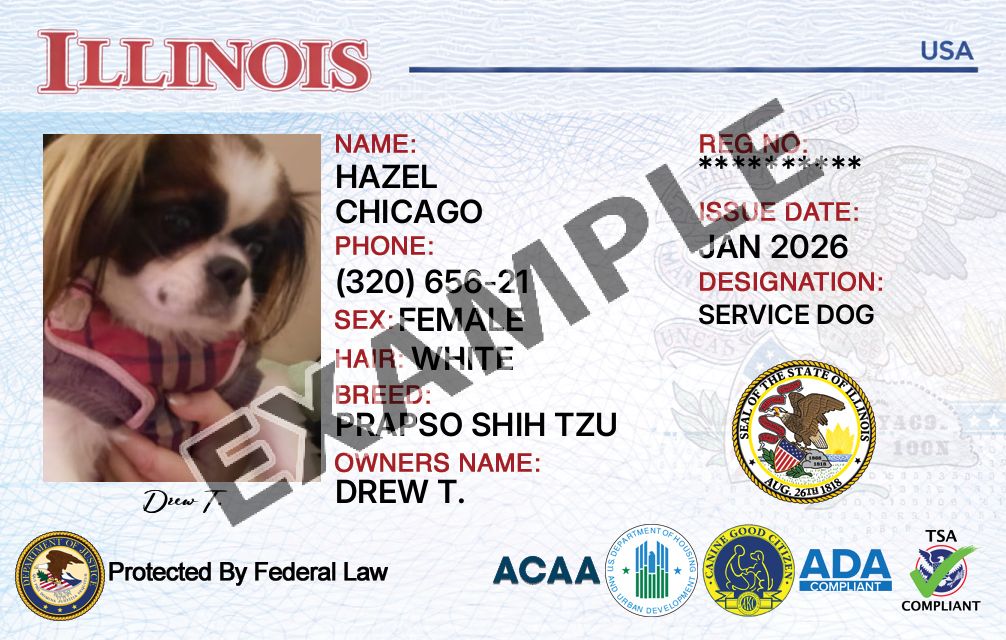
State Licensed, Service Dogs and Emotional Support Dogs in Illinois
If you’re searching where do I register my dog in Illinois for my service dog or emotional support dog, the most important thing to know is this: in Illinois, “registration” usually means local dog licensing (often tied to rabies vaccination), and it is typically handled by your city, township, or county animal control—not a statewide service-dog or ESA registry.
This page explains where to register a dog in Illinois, how an animal control dog license Illinois process commonly works, what Illinois requires for rabies vaccination, and how licensing differs from the legal definitions of service dogs and emotional support animals (ESAs).
Where to Register or License Your Dog in Illinois
Because dog licensing is usually handled locally, you’ll typically register or license your dog through your county animal control, county public health/animal services, or your municipal clerk (city/village). Below are several examples of official Illinois offices that handle animal control, rabies enforcement, and/or pet licensing-related services. Always confirm which office serves your address.
Cook County Department of Animal and Rabies Control (ARC)
Champaign County Animal Control (Animal Services Facility)
Sangamon County Animal Control & Adoption Center
DuPage County Animal Services
Overview of Dog Licensing in Illinois
What “registering” usually means
When people ask where to register a dog in Illinois, they’re usually talking about getting a local license tag and placing the license information on the dog’s collar (or keeping the tag accessible). A dog license in Illinois is generally established and enforced through local ordinances and county animal control programs, not a single statewide registration database for all pets.
Rabies vaccination is a statewide baseline requirement
Illinois law requires owners to have dogs vaccinated against rabies once the dog is 4 months of age or older, and then receive a second rabies vaccination within one year of the first. After that, rabies booster timing follows the vaccine’s USDA-licensed schedule and veterinary guidance. This statewide rabies requirement is one reason local licensing programs frequently ask for rabies proof before issuing a license.
Why animal control and public health are involved
Local and county animal control programs help enforce rabies control measures, respond to bites, manage stray animals, and implement ordinances. In many Illinois communities, licensing fees also support animal control operations and rabies enforcement activities.
How Dog Licensing Works Locally in Illinois
Step-by-step: a typical local licensing process
- Get rabies vaccination from a licensed veterinarian and keep the rabies vaccination certificate. Many local programs will not issue a license without current rabies proof.
- Confirm your licensing jurisdiction (city/village vs. unincorporated county). This is the key step for “animal control dog license Illinois” questions because enforcement authority can change at municipal boundaries.
- Apply and pay the local licensing fee (often annual). Fees may differ for spayed/neutered vs. intact dogs, or for senior/low-income discounts where offered.
- Receive a license tag or proof of license and follow the local rules about displaying the tag on your dog’s collar/harness.
- Renew on time and keep rabies vaccination current to avoid penalties under local ordinances.
What if your dog is a service dog or emotional support dog?
Even if your dog helps with a disability, local licensing rules often still apply because licensing is about public health, identification, and rabies control. In other words:
- A dog can be a service dog under the law and still need a local dog license in Illinois.
- A dog can be an emotional support animal (for housing purposes) and still need a local dog license in Illinois.
- A license tag is not the same thing as “service dog registration” or “ESA registration.”
Rabies tags vs. license tags (why it can feel confusing)
Illinois’ rabies framework involves veterinarians issuing documentation of rabies inoculation and, in some systems, distributing tags that relate to rabies registration and local compliance. Locally, you may also receive a separate municipal dog license tag. Some places combine these; others keep them separate. If you’re unsure which tag you have, your local animal services office can usually confirm what the tag number represents.
Service Dog Laws in Illinois
Service dogs are defined by training and disability-related tasks
Under the Americans with Disabilities Act (ADA), a service animal is generally a dog that is individually trained to do work or perform tasks directly related to a person’s disability. The ADA does not require a service dog to be professionally trained, certified, registered, or to wear a vest.
Public-access questions businesses can ask (and what they cannot)
In public places where the ADA applies, when it is not obvious what a dog does, staff are generally limited to asking two questions: (1) whether the dog is required because of a disability, and (2) what work or task the dog has been trained to perform. They generally cannot require documentation proving the dog is registered, licensed, or certified as a service animal.
Service dog status is not the same as licensing
A local license is a public health and local ordinance compliance step. Service dog status is about disability accommodation and task-trained assistance. So, if you’re asking where do I register my dog in Illinois for my service dog, the practical answer is usually: license your dog through your local city/county office (if required), and understand that the dog’s service status is established by training and disability-related tasks—not by purchasing any registration online.
Emotional Support Animal Rules in Illinois
ESAs are not service animals under the ADA
Emotional support animals (sometimes called “comfort animals”) can provide important mental health benefits. However, under the ADA, emotional support or comfort alone is not considered a trained task, so ESAs do not have the same public-access rights as service dogs in places like restaurants, stores, or most public-facing businesses.
Where ESAs matter most: housing
ESA requests most commonly arise in housing, where different legal rules may apply than the ADA public-access rules. In housing contexts, people typically request a reasonable accommodation for an assistance animal. The details depend on the type of housing and the applicable laws/policies. Regardless of accommodation status, local communities may still expect compliance with rabies vaccination and any required local dog licensing rules.
Avoid “ESA registration” websites
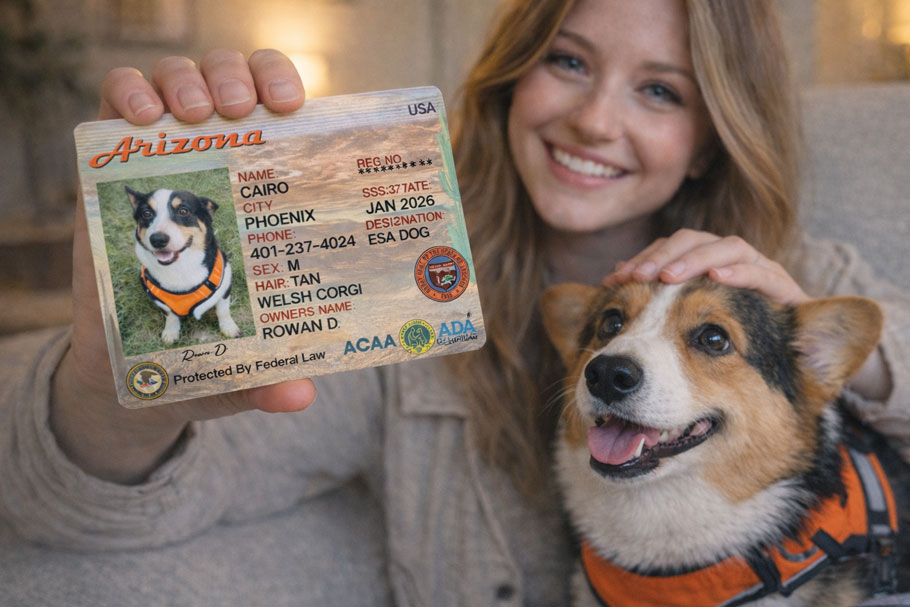
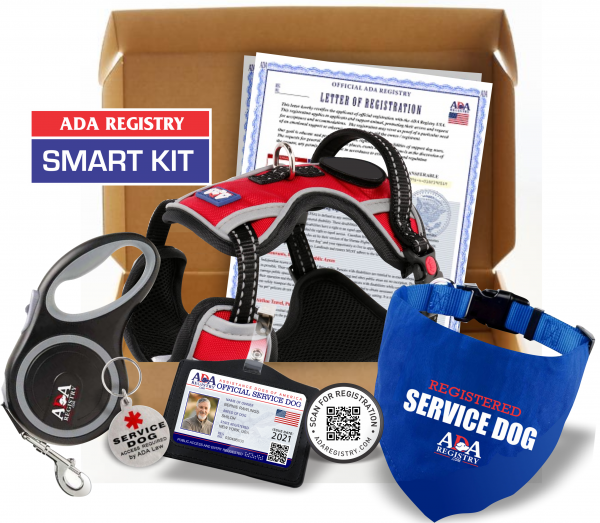
If you’re searching where do I register my dog in Illinois for my emotional support dog, be cautious: many third-party “registries” sell cards, certificates, and IDs that are not required by law for local licensing or for determining service dog status under the ADA. For Illinois residents, the reliable path is typically (1) keep vaccinations current, (2) follow local licensing rules, and (3) for housing-related ESA accommodations, follow your housing provider’s lawful accommodation process.
Frequently Asked Questions
Register A Dog In Other Illinois Counties
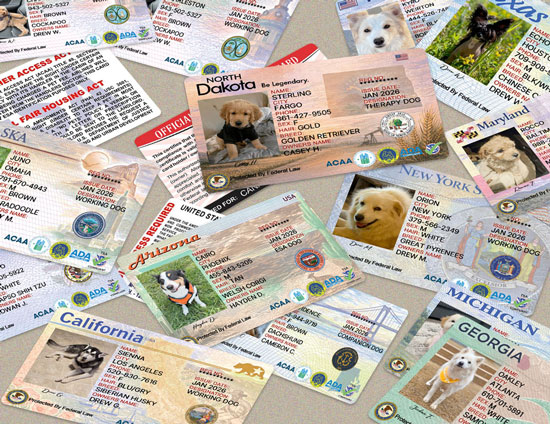
Select your county from the dropdown below to get started with your dog’s ID card. Requirements and license designs may vary by county, so choose your location to see the correct options and complete your pup’s registration.
- Adams County Dog Registration
- Alexander County Dog Registration
- Bond County Dog Registration
- Boone County Dog Registration
- Brown County Dog Registration
- Bureau County Dog Registration
- Calhoun County Dog Registration
- Carroll County Dog Registration
- Cass County Dog Registration
- Champaign County Dog Registration
- Christian County Dog Registration
- Clark County Dog Registration
- Clay County Dog Registration
- Clinton County Dog Registration
- Coles County Dog Registration
- Cook County Dog Registration
- Crawford County Dog Registration
- Cumberland County Dog Registration
- DeKalb County Dog Registration
- DeWitt County Dog Registration
- Douglas County Dog Registration
- DuPage County Dog Registration
- Edgar County Dog Registration
- Edwards County Dog Registration
- Effingham County Dog Registration
- Fayette County Dog Registration
- Ford County Dog Registration
- Franklin County Dog Registration
- Fulton County Dog Registration
- Gallatin County Dog Registration
- Greene County Dog Registration
- Grundy County Dog Registration
- Hamilton County Dog Registration
- Hancock County Dog Registration
- Hardin County Dog Registration
- Henderson County Dog Registration
- Henry County Dog Registration
- Iroquois County Dog Registration
- Jackson County Dog Registration
- Jasper County Dog Registration
- Jefferson County Dog Registration
- Jersey County Dog Registration
- Jo Daviess County Dog Registration
- Johnson County Dog Registration
- Kane County Dog Registration
- Kankakee County Dog Registration
- Kendall County Dog Registration
- Knox County Dog Registration
- Lake County Dog Registration
- LaSalle County Dog Registration
- Lawrence County Dog Registration
- Lee County Dog Registration
- Livingston County Dog Registration
- Logan County Dog Registration
- Macon County Dog Registration
- Macoupin County Dog Registration
- Madison County Dog Registration
- Marion County Dog Registration
- Marshall County Dog Registration
- Mason County Dog Registration
- Massac County Dog Registration
- McDonough County Dog Registration
- McHenry County Dog Registration
- McLean County Dog Registration
- Menard County Dog Registration
- Mercer County Dog Registration
- Monroe County Dog Registration
- Montgomery County Dog Registration
- Morgan County Dog Registration
- Moultrie County Dog Registration
- Ogle County Dog Registration
- Peoria County Dog Registration
- Perry County Dog Registration
- Piatt County Dog Registration
- Pike County Dog Registration
- Pope County Dog Registration
- Pulaski County Dog Registration
- Putnam County Dog Registration
- Randolph County Dog Registration
- Richland County Dog Registration
- Rock Island County Dog Registration
- Saline County Dog Registration
- Sangamon County Dog Registration
- Schuyler County Dog Registration
- Scott County Dog Registration
- Shelby County Dog Registration
- St. Clair County Dog Registration
- Stark County Dog Registration
- Stephenson County Dog Registration
- Tazewell County Dog Registration
- Union County Dog Registration
- Vermilion County Dog Registration
- Wabash County Dog Registration
- Warren County Dog Registration
- Washington County Dog Registration
- Wayne County Dog Registration
- White County Dog Registration
- Whiteside County Dog Registration
- Will County Dog Registration
- Williamson County Dog Registration
- Winnebago County Dog Registration
- Woodford County Dog Registration